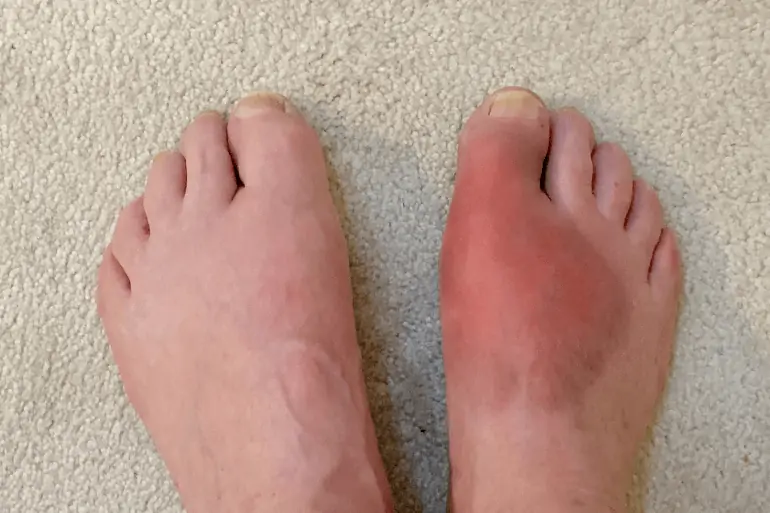
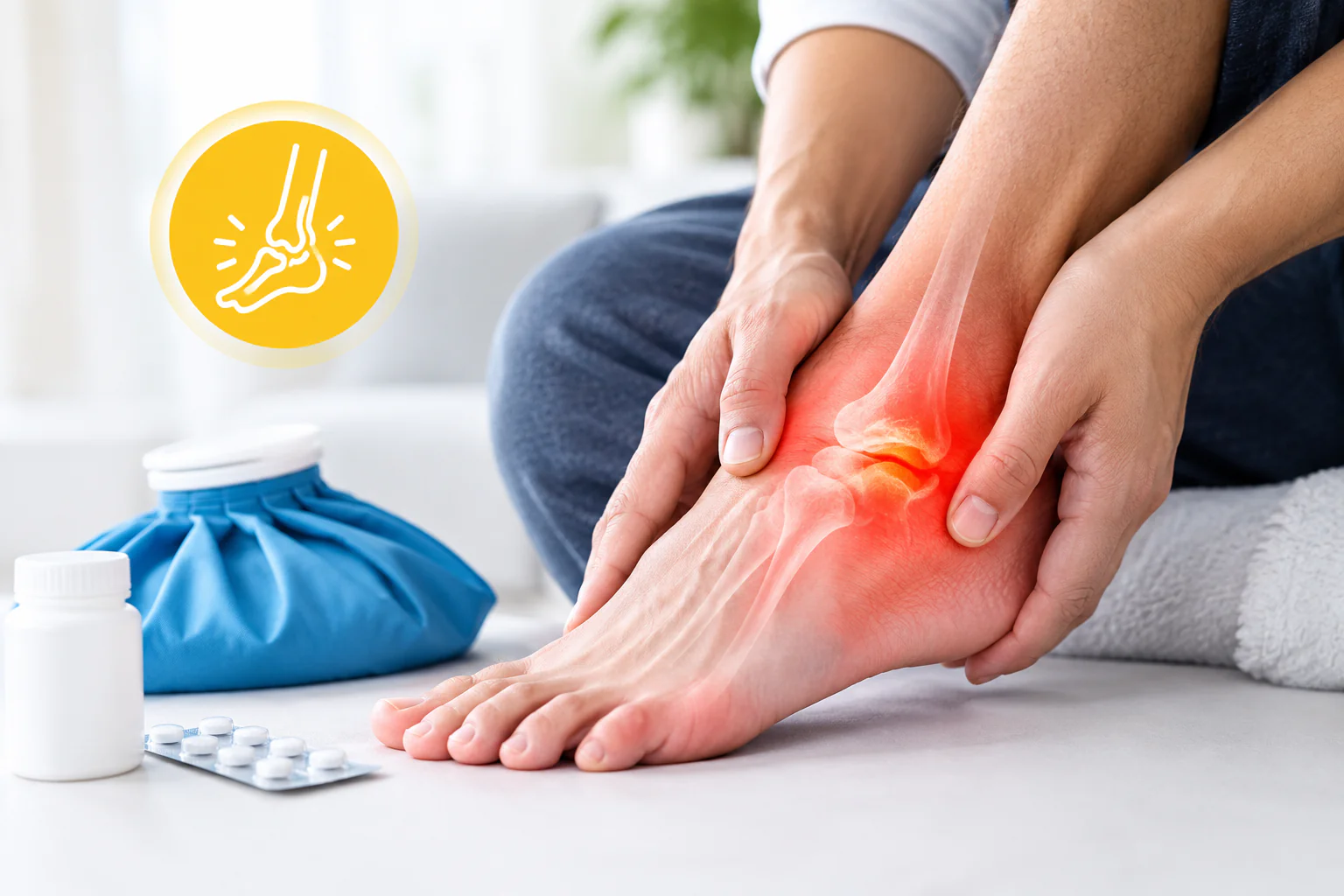
If a joint suddenly swells up and hurts more than a bump or a sprain would explain, high uric acid is often the reason. A lot of people searching for a uric acid specialist doctor near me in Navi Mumbai end up here, and it’s exactly what Dr. Manohar Joshi treats, both gout and high uric acid, at his clinics in Vashi and Panvel.
Gout happens when uric acid builds up in the blood and forms sharp crystals inside a joint. It’s one of the more painful kinds of arthritis, and it tends to return if the uric acid level underneath isn’t brought down. That’s really what this page is about: what’s actually happening in your body, and what treatment here looks like in practice.
Uric acid is a byproduct your body makes when it breaks down purines, which happens constantly as cells turn over. Most of it leaves through the kidneys, in urine. Trouble starts when the body makes more than it can clear, or the kidneys aren’t clearing it fast enough. Either way, the extra uric acid stays in the blood, and over time some of it crystallizes inside a joint.
Doctors call the blood-level problem hyperuricemia. Once it starts causing actual joint attacks, that’s gout.
Patients often ask which doctor to consult for uric acid. A general physician can order the first blood test and start basic treatment. But once attacks keep coming back, or the uric acid level stays high despite diet changes, a rheumatologist, a specialist in joint and autoimmune conditions, is who should be managing it. That’s what Dr. Joshi has been doing since 2010.
Gout is not a one-time event for most people. It tends to move through stages, and understanding where you are in that progression matters for how treatment is planned.
The stages of gout
Who is more likely to get gout
What happens if gout is left untreated
Repeated gout attacks don’t just mean repeated pain. Left unmanaged, high uric acid can lead to permanent joint damage, kidney stones, and in some cases chronic kidney disease. This is really the main reason we push for ongoing treatment and monitoring rather than just treating each flare as it comes and stopping there.
Preventing the next gout flare
If you’ve had even one gout attack, it’s worth getting seen by a doctor for uric acid management before the next one happens, rather than waiting for it.
We don’t treat every swollen joint as the same problem. Before recommending anything, we usually run:
The number on the report doesn’t tell the whole story by itself. Someone with a uric acid level of 8 who’s never had a flare needs a different conversation than someone at 7 who’s had three attacks this year. That’s why the first visit usually involves talking through history as much as reading lab values.

When a joint is actively inflamed, the priority is bringing the pain and swelling down fast, using anti-inflammatory medication and other pain management options depending on severity.

This is the part of uric acid treatment that actually stops the next attack. Medication that lowers uric acid production, or helps the body clear it faster, combined with diet changes and weight management where relevant. None of it works well without follow-up, which is why we check uric acid levels periodically instead of assuming a prescription is doing its job.

Nobody needs to give up meat entirely. What tends to help is cutting back on red meat and organ meat, watching alcohol (beer raises uric acid more than most other drinks), staying hydrated, and keeping an eye on sugary drinks, which push uric acid up more than most people expect.

Dr. Joshi completed his MBBS from Maharashtra University of Health Sciences, Nashik, in 2006, followed by an MD in General Medicine from Dr. D.Y. Patil Medical College, Pune, in 2010. He has been an assistant professor at D.Y. Patil Medical College since then, and practiced as a rheumatologist across Belapur, Jalgaon, Mahad, and Kalyan before starting JCR Clinic. He also consults at Apollo Hospitals, Navi Mumbai.
Rheumatology covers more than gout alone, including rheumatoid arthritis, lupus, and other autoimmune joint conditions, so the diagnostic process here draws on more than just a single uric acid number. If something else is going on alongside the gout, it tends to get picked up rather than missed.
Dr. Joshi has been treating gout and uric acid disorders since 2010, across Belapur, Jalgaon, Mahad, and Kalyan before setting up here. That's over a decade of seeing what actually works and what doesn't, not just reading about it.
Blood work, joint fluid analysis, imaging, and kidney function tests are used as needed, not skipped to save time. Getting the diagnosis right the first time matters more than getting there quickly.
Two patients with the same uric acid level can need very different treatment depending on how often they flare, their kidney function, and what else is going on. Treatment here starts from your actual test results and history, not a standard protocol applied to everyone.
clinics mean you're not travelling far for repeat visits, which matters for a condition that needs ongoing monitoring rather than a one-time fix.
Every uric acid treatment plan here starts with getting the diagnosis right.
Accurate Diagnosis Gout gets confirmed through blood work and, when needed, joint fluid analysis, not by assuming every swollen joint is the same thing.
Pain Management Flares get treated quickly so patients aren’t stuck waiting days for relief.
Ongoing Care Once a flare settles, the focus shifts to the uric acid level itself, medication, diet, and repeat testing, so attacks become less frequent over time rather than just being managed one at a time.
A rheumatologist is the right uric acid specialist doctor to see, especially if the flares keep coming back. A general physician can run the first blood test, but ongoing management tends to work better with someone who specializes in joint and autoimmune conditions.
Generally above 7 mg/dL in men and 6 mg/dL in women. Above 9 mg/dL, the risk of an actual gout attack goes up sharply. A blood test is the only way to know your own number.
Sometimes, if it’s mild and caught early. Most people who’ve already had a few attacks end up needing medication alongside diet changes, at least for a while.
Yes, but it’s caused specifically by uric acid crystals rather than wear and tear or an autoimmune reaction, which is part of why it responds well to targeted treatment.
Vashi clinic runs Monday to Saturday, 6 to 8 pm. Panvel clinic runs Monday to Saturday, 2 to 5 pm. Call +91 9325344124 to book either.


Our clinic is dedicated to the diagnosis and treatment of musculoskeletal and autoimmune conditions, including Gout. With years of experience and expertise in the field of rheumatology, our team is equipped to offer you the highest quality of care.
We understand that Gout affects individuals differently. That’s why we take a patient-centred approach to care, tailoring treatment plans to address your specific symptoms and needs. Your journey to managing Gout effectively starts here.
We employ cutting-edge diagnostic tools and techniques to ensure an accurate diagnosis of Gout and a comprehensive understanding of its impact on your health. Precise diagnosis is crucial to effective treatment.
Accurate diagnosis is the foundation of effective treatment. Our clinic offers comprehensive diagnostic evaluations to confirm Gout and assess its severity, allowing us to develop the most suitable treatment plan for you.
We understand the importance of pain relief in improving your overall well-being. Our experts employ various pain management techniques to alleviate discomfort and help you regain control of your life.
Gout requires individualized care. Our team creates personalized treatment plans that may include medication management, dietary and lifestyle modifications, and other therapies aimed at managing symptoms, preventing flares, and improving your quality of life.
Discover the success stories of those who have found relief and improved quality of life at Joshi’s Clinic of Rheumatology. Read our patients’ testimonials to learn about their experiences and the positive impact our clinic has had on their lives.
Copyrights © 2025.Joshi’s Clinic of Rheumatology | Develop By GC Digital LLP