Most parents have heard the phrase “it’s just growing pains” more times than they can count. A child limps a little after football practice, complains about a sore knee at bedtime, or skips the stairs two at a time less often than before. It seems minor. It seems like something kids grow out of.
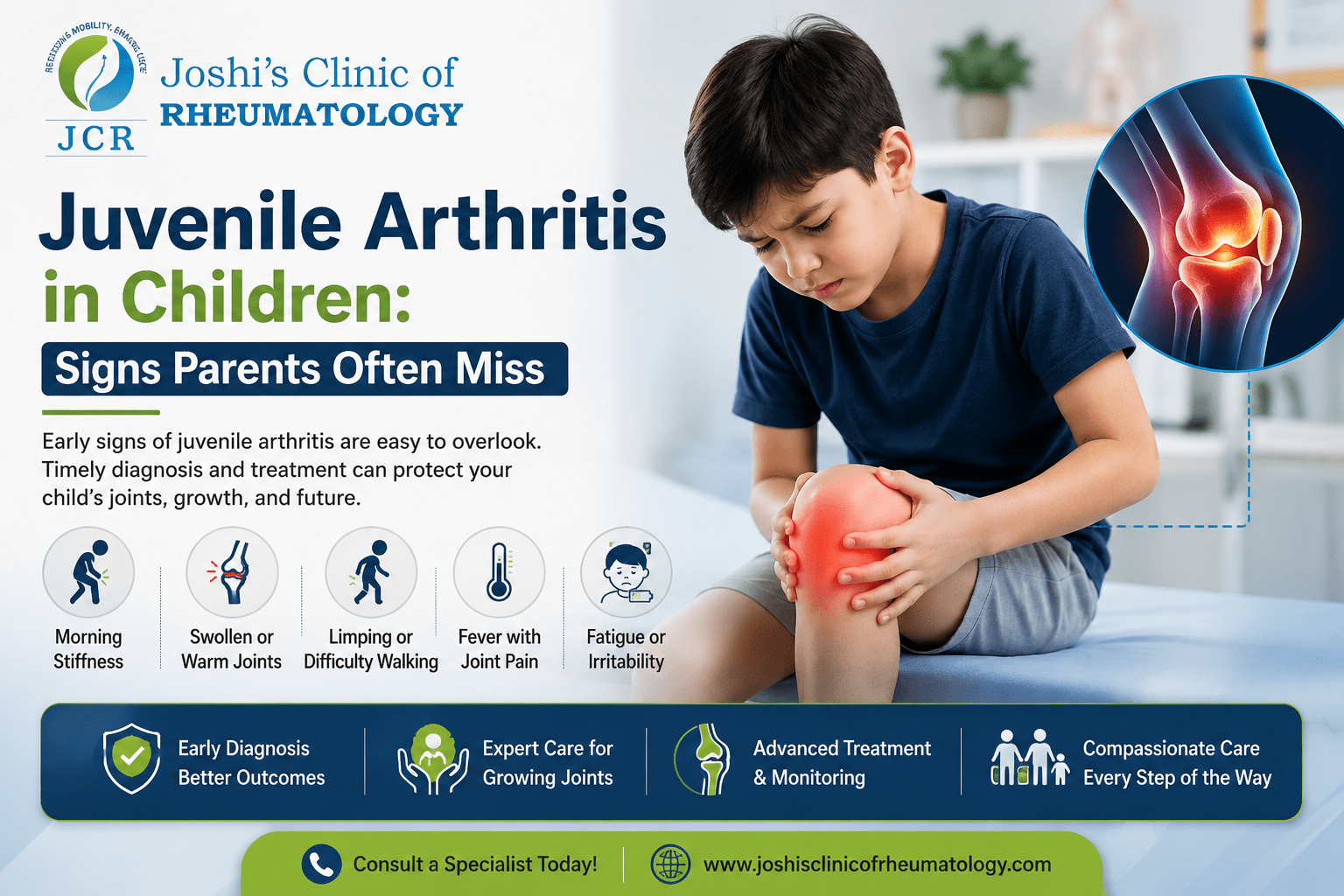
But sometimes it isn’t growing pains at all. It’s juvenile arthritis, and because the early signs look so ordinary, it is one of the most commonly missed conditions in childhood. Juvenile arthritis in children is often mistaken for a passing injury, a vitamin deficiency, or plain tiredness, which is exactly why so many cases go unnoticed until the pain becomes hard to ignore.
This blog walks you through what juvenile arthritis symptoms actually look like, how juvenile idiopathic arthritis differs from the usual childhood aches, what the common child joint pain causes are, and why seeing a specialist early makes a real difference to your child’s joints, growth, and comfort. We’ll also cover the arthritis in kids signs parents tend to dismiss, and how this fits into the wider picture of autoimmune disease in children.
Juvenile idiopathic arthritis, often shortened to JIA, is an autoimmune condition where the child’s own immune system mistakenly attacks the joints, causing ongoing inflammation. Unlike a sprain or a bruise, it doesn’t heal on its own in a few days. It lingers, comes back, and if left unmanaged, can quietly damage the joint over time.
The word “idiopathic” simply means doctors don’t point to one single cause. A mix of genetics and environmental triggers, sometimes a viral infection, seems to set it off in children who are already predisposed to it.
It’s not rare either. Juvenile arthritis in children affects thousands of kids across India, yet it’s still under-recognized because parents (and sometimes even doctors on a first visit) assume it’s something else entirely, a sports injury, a vitamin deficiency, or simply a phase.
This is the comparison that matters most, and it’s the one most blogs skip. Here’s a simple way to think about growing pains vs arthritis:
Growing pains usually:
Juvenile arthritis symptoms, on the other hand:
If your child’s pain follows a pattern rather than showing up randomly after play, it’s worth paying closer attention.
Here are the early clues that tend to get brushed aside, and shouldn’t be.
Juvenile idiopathic arthritis is part of a broader group of autoimmune disease in children, and like most autoimmune conditions, the earlier it’s caught, the easier it is to manage. Left unchecked, ongoing joint inflammation can lead to permanent joint damage, uneven limb growth, and in some types of JIA, eye inflammation called uveitis that can affect vision if it isn’t monitored.
This is exactly why pediatric arthritis symptoms shouldn’t be filed under “let’s wait and see.” A short delay rarely causes harm. Months of undiagnosed inflammation can.
If you bring your child in with suspected child joint pain and swelling, here’s roughly what to expect. The doctor will take a detailed history, ask about the pattern of pain, check which joints are affected, and look for stiffness, swelling, or restricted movement. Blood tests may be used to check inflammation markers, and sometimes imaging is needed to rule out other child joint pain causes such as infections or injuries.
Juvenile arthritis diagnosis isn’t always instant. Some forms of JIA take a few visits to confirm, since symptoms can flare up and settle down unpredictably. This is normal, and it’s part of why ongoing care with a specialist matters more than a single appointment.
The good news, and it deserves to be said clearly: juvenile arthritis treatment has come a long way. With the right combination of medication, physiotherapy, and regular monitoring, most children with JIA go on to live active, normal lives. Many children are able to return to sports, school activities, and play without restriction once inflammation is under control.
The key factor isn’t the severity at diagnosis. It’s how early the diagnosis happens.
If your child has had joint pain, swelling, or a limp lasting more than a couple of weeks, or if you’ve noticed morning stiffness that doesn’t fade, it’s time to move past “let’s see if it gets better on its own.”
Dr. Joshi’s clinic offers focused evaluation for children showing early JIA symptoms, with a calm, child-friendly approach that keeps both your child and you comfortable through the process. As a trusted pediatric rheumatologist in Navi Mumbai, Dr. Joshi works closely with families to reach a clear diagnosis and build a treatment plan suited to your child’s specific needs.
If you’re searching for the best doctor for child joint pain or a reliable child arthritis specialist in Mumbai, an early consultation costs you very little time but can save your child years of unnecessary discomfort.
Not every ache is growing pains, and not every limp is a bruise waiting to fade. Trust the pattern. If your child’s joint pain keeps returning, comes with stiffness or swelling, or changes how they move through their day, get it checked. A short visit can settle your worry either way, and if it does turn out to be juvenile arthritis, the earliest possible start on treatment is the best gift you can give your child’s joints.